
Negative MRI linked to lower surgery success rate in Cushing’s disease
Study: Abnormal pituitary cell growth harder to spot on scans, during operation
Written by |
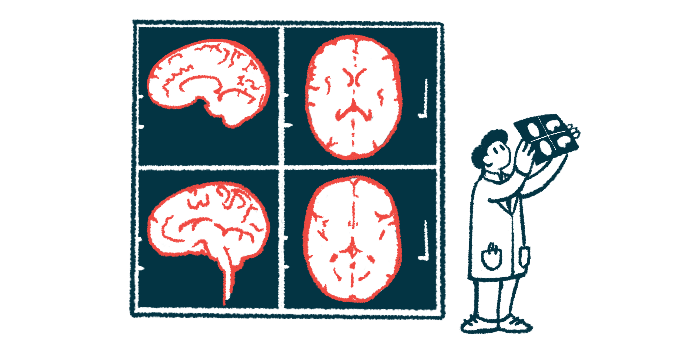




People with Cushing’s disease who don’t have a disease-causing tumor visible on MRI scans are less likely to experience full symptom control following pituitary surgery, a new study shows.
Researchers think the lower success rate in these patients may be due to some individuals having corticotroph hyperplasia, an underrecognized noncancerous phenomenon marked by abnormal pituitary cell growth. This abnormal cell growth is generally harder to detect on MRI scans and during surgery, making it less likely that surgery will successfully remove all the abnormal cells.
The researchers cautioned that few studies have evaluated the prevalence of corticotroph hyperplasia among people with Cushing’s disease, making it impossible to draw far-reaching conclusions at this time. They called for more research into how this phenomenon may impact treatment outcomes for Cushing’s patients.
The study, “Cushing’s disease and negative MRI: a single-center series, systematic literature review, and meta-analysis,” was published in Neurosurgical Review.

MRI sometimes fails to detect a tumor
Cushing’s disease is caused by a tumor in the pituitary gland, a tiny structure located in the brain. The pituitary tumor releases large amounts of adrenocorticotropic hormone (ACTH), a signaling molecule that prompts the production of the stress hormone cortisol. High cortisol levels ultimately give rise to Cushing’s symptoms, such as weight gain and skin changes.
When feasible, the first-line treatment for Cushing’s disease is surgery to remove the disease-driving pituitary tumor. To help guide surgeries, patients commonly undergo an MRI to image the pituitary gland in an attempt to locate the tumor. But sometimes, an MRI fails to detect a tumor.
A negative MRI finding doesn’t exclude a diagnosis of Cushing’s disease — other tests can confirm high ACTH secretion from the pituitary gland, and sometimes these tumors are just too small to see on imaging scans. But if the tumor can’t be seen on MRI, it makes surgery more complicated because instead of knowing where the tumor is beforehand, surgeons have to wait until the surgery to evaluate the pituitary gland and carefully look for suspicious tissue.
Nearly 1/3 of Cushing’s patients with negative MRI achieve remission

In this study, scientists in Italy reported outcomes of nearly two dozen people with MRI-negative Cushing’s disease who underwent pituitary surgery at their center. In all the surgeries, suspicious tissue was removed and taken to a lab for analysis.
In nine of the patients, lab analyses of the removed tissue confirmed the presence of an ACTH-producing pituitary tumor. Notably, all nine of these patients experienced remission, or resolution of symptoms, soon after recovering from surgery.
In another 10 patients, tissue analysis didn’t show evidence of a pituitary tumor but did reveal corticotroph hyperplasia — a phenomenon marked by an increased number of ACTH-producing cells. The researchers said that corticotroph hyperplasia “is usually not associated with major modification of the pituitary gland, may be largely unrecognized on MRI analysis, and may also be difficult to recognize on [tissue] analysis in small surgical specimens.”
Notably, only two patients with corticotroph hyperplasia achieved remission immediately after surgery. Other patients with corticotroph hyperplasia were able to control their symptoms only by adding other treatments.
In the remaining cases, the removed tissue did not show abnormalities. None of these patients achieved disease remission over the course of follow-up, even with the addition of other treatments.
Overall, acknowledging the present limitations in the pre- and post-operative diagnostic phases of [Cushing’s disease] is important to plan future multidisciplinary, multicenter, systematic studies to further advance the diagnosis and management of patients with [Cushing’s disease] and negative MRI.
To supplement their findings, researchers also conducted a meta-analysis, a type of study that pools data from previously published studies and analyzes them collectively. This meta-analysis included data from 35 previous studies, covering more than 1,000 patients.
Results from the meta-analysis showed that around 70% of patients with MRI-negative Cushing’s disease achieved remission following surgery — in other words, nearly a third (30%) did not achieve remission. By contrast, in Cushing’s patients with tumors visible on MRI, remission was achieved after surgery in 82% of the cases.
“Our findings highlight that nearly 1 in 3 patients with [Cushing’s disease] and a negative pituitary MRI fail to achieve disease remission,” the researchers wrote.
They noted that most studies in the meta-analysis did not report whether any of the patients had corticotroph hyperplasia. But when data were available, this phenomenon was reported in nearly 20% of patients with MRI-negative Cushing’s.
Since corticotroph hyperplasia was often associated with a poor surgical response at their center, the researchers speculated that this phenomenon may help explain why patients with MRI-negative Cushing’s disease are less likely to have successful surgery. They called for additional studies to explore how common corticotroph hyperplasia is in MRI-negative Cushing’s disease patients, noting that a better understanding of this phenomenon may help guide personalized treatments.
“Overall, acknowledging the present limitations in the pre- and post-operative diagnostic phases of [Cushing’s disease] is important to plan future multidisciplinary, multicenter, systematic studies to further advance the diagnosis and management of patients with [Cushing’s disease] and negative MRI,” they wrote.