
How I explain Cushing’s disease to children
Kids often ask questions about my mobility aids, medications
Written by |





I love it when kids ask me questions about my Cushing’s disease, because it’s a great chance to educate them.
Kids are super curious, especially about my mobility aids and medications. In my experience, children generally understand why older adults or people who are paralyzed may need mobility aids. However, they tend to be confused by people like me who might use a wheelchair one day but be able to walk the next. Kids aren’t often taught about chronic pain or illness, or why some people only use mobility aids occasionally.
I usually let children look at my cane. I have two — a casual, floral one, and a fancier wooden one with a snake on top that I’m obsessed with. When children ask me about it, I tell them my legs are weaker than most people’s, and the cane helps me walk. If it’s a child of someone I know, I’ll let them touch and try out the aid. However, if it’s a stranger’s child, I keep my cane close, as I’m unsure how the parents might feel about me handing it over.

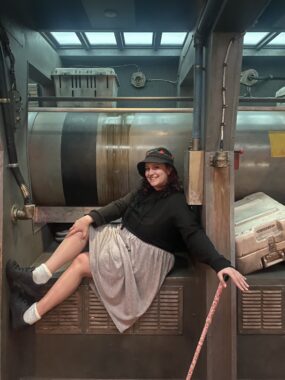
Noura Costany poses with their floral cane at Disneyland for their 28th birthday. (Photo by Lily Brown)
The wheelchair questions are less frequent. Children that I know usually ask, “Are you OK?” Since I’m not always in a wheelchair, they tend to think something is wrong if I’m using it.
In response, I usually explain how I’m feeling that day. I might need a wheelchair because I’m dizzy or fatigued, and I use it at night due to my vision issues and night blindness. I try to be as honest as possible without being graphic.
For example, I’ll say, “I’m feeling a bit dizzy today. Do you know what that means? It’s like when you spin around in circles and feel wobbly. Since I feel that way, I use this chair to move around.” Or, “At nighttime, I have some trouble seeing because it’s much darker out. So, to make sure I’m safe, I stay in this chair and have someone help me move around.”
It’s important to me that children, especially those I know, aren’t scared of mobility aids. I have a fairly clunky wheelchair with huge, intimidating wheels, since that is what I could afford. I want kids to understand that my wheelchair is sturdy, but not dangerous, and that it’s simply an extension of me when I need it.
Medication

Noura Costany shows off their snake cane in upstate New York last fall. (Photo by Peter Costany)
Medication comes up a lot with children, as well. I take a mix of prescribed meds and supplements every day, so people often see them. Children usually ask me what my medication is for. I try to follow the same guidelines I use for my chair. I don’t want to be too vague and simply say, “These make me feel better,” but I don’t want to give too much detail, either. Instead, I share a child-friendly explanation of how a particular medication helps me.
With ketoconazole, for example, I’ll tell them that everybody has hormones in their body, but I have too many hormones, so I take the medication to lower my levels. With spironolactone, I’ll tell kids it helps keep my skin safe. And with vitamins, I’ll explain that milk thistle supports my liver, berberine helps with my blood sugar, etc.
Too often, when able-bodied people teach children about disabilities, they focus on the visible ones. Chronic illness isn’t usually discussed, so my very existence can confuse kids. That’s why I try to be honest and upfront when they ask about my illness. Understanding me will help them better understand other children and adults with chronic diseases.
You can also follow my journey on TikTok and YouTube.
Note: Cushing’s Disease News is strictly a news and information website about the disease. It does not provide medical advice, diagnosis, or treatment. This content is not intended to be a substitute for professional medical advice, diagnosis, or treatment. Always seek the advice of your physician or other qualified health provider with any questions you may have regarding a medical condition. Never disregard professional medical advice or delay in seeking it because of something you have read on this website. The opinions expressed in this column are not those of Cushing’s Disease News or its parent company, Bionews, and are intended to spark discussion about issues pertaining to Cushing’s.

Leave a comment
Fill in the required fields to post. Your email address will not be published.