
The buffalo hump is one of my least favorite parts of Cushing’s disease
It may be considered benign, but it's not painless
Written by |





Many people with Cushing’s disease have the dreaded “buffalo hump.” Mine appeared a few years before my official diagnosis. My husband pointed out a weird lump between my shoulders, but I shrugged it off as bad posture and started stretching to correct it. However, as the lump grew larger and harder, I realized it was a sign of a much bigger issue.
The buffalo hump is one of the most noticeable signs of Cushing’s disease. It develops between the shoulders or at the base of the neck as a result of chronically high cortisol levels, which can change how the body stores fat.

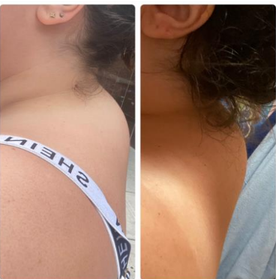
A comparison of Noura Costany’s hump from one month to the next when their Cushing’s disease was untreated in 2022. (Photos by Peter Costany)
Mine is huge, taking more than two hands to cover it. And it’s not painless; it puts a lot of pressure on my spine, leading to neck and back pain. While the lump is considered benign, it’s still a huge nuisance and one of my least favorite parts of Cushing’s disease.
It’s also ugly. When I first developed it, I would joke about myself by singing lyrics from “The Hunchback of Notre Dame“: “I am deformed/ … And I am ugly.”
Obviously, I’m embarrassed by the hump. I’ve tried everything I can think of to get rid of it: losing weight, stretching, changing how I sleep, lying flat on the ground for 30 minutes a day, etc. None of it budged the thing.
I’ve considered surgical removal. It would be worth it to relieve the pain and pressure the hump causes. I’m just not sure if it will help long-term, since I currently have active Cushing’s disease that I’m treating medically. Unfortunately, I think it would just grow back.
I’m also not sure that the surgery would be covered by insurance. Yes, the thing causes a lot of pain, but having it removed might not be considered medically necessary.
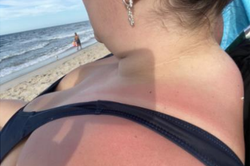
A different angle of Noura Costany’s buffalo hump shows how wide it is while Noura was off treatment. (Photo by Peter Costany)
If I were ever in remission, I think I’d get the surgery, regardless of the cost. On top of the pain, I don’t want to be embarrassed by parts of my body.
I wish I could say that I didn’t care what anyone thought, that I’m never bothered by people staring at it, that I don’t mind when clothes don’t fit right or when I see a clear reminder of my disease in pictures. But I’m not that enlightened. I hate the thing.
For now, I’ll keep living with the buffalo hump, despite my feelings about it. I hope, one day, I’ll either learn to live with it or it’ll become a thing of the past.
You can also follow my journey on TikTok and YouTube.
Note: Cushing’s Disease News is strictly a news and information website about the disease. It does not provide medical advice, diagnosis, or treatment. This content is not intended to be a substitute for professional medical advice, diagnosis, or treatment. Always seek the advice of your physician or other qualified health provider with any questions you may have regarding a medical condition. Never disregard professional medical advice or delay in seeking it because of something you have read on this website. The opinions expressed in this column are not those of Cushing’s Disease News or its parent company, Bionews, and are intended to spark discussion about issues pertaining to Cushing’s.



Danita Zacharias
Hi Noura,
Don't rush to get surgery. I have also battled the Cushings beast. Long story, like so many other, but after I had both my adrenal glands removed, my buffalo hump and moon face went away. Hopefully once you're remission yours will to. Stay strong!
Judith Lynn
I am writing about my daughter. She has all the symptoms but when tested her cortisol is normal. She has given up.